




“Connected” sport: smarter centres and more active public spaces
Madrid, August 20, 2025
The digitalization of sports facilities has ceased to be an alternative to traditional models and has become a model in itself for the entire sports facilities ecosystem.
Digitalization allows sports centers and urban sports facilities to operate more efficiently, offer more memorable experiences and—something vital for sports managers—justify investments with data. From municipal sports complexes to boutique chains, all have embraced the inevitable convergence of digitalization, analytics and immersive experiences, which is redefining how we train, how we move through our cities and how we relate to sports brands.
How has the sector evolved and where is it heading?
Over the last decade, we have moved from isolated solutions, such as access control or online booking systems, to integrated digital platforms that orchestrate the value cycle from start to finish: IoT sensors (electronic devices that detect and measure physical or environmental variables) and occupancy counters feeding real-time dashboards to optimize capacity, cleaning and maintenance; AI mechanisms that adjust climate control or schedules based on demand, or predictive maintenance systems that reduce breakdowns and energy consumption.
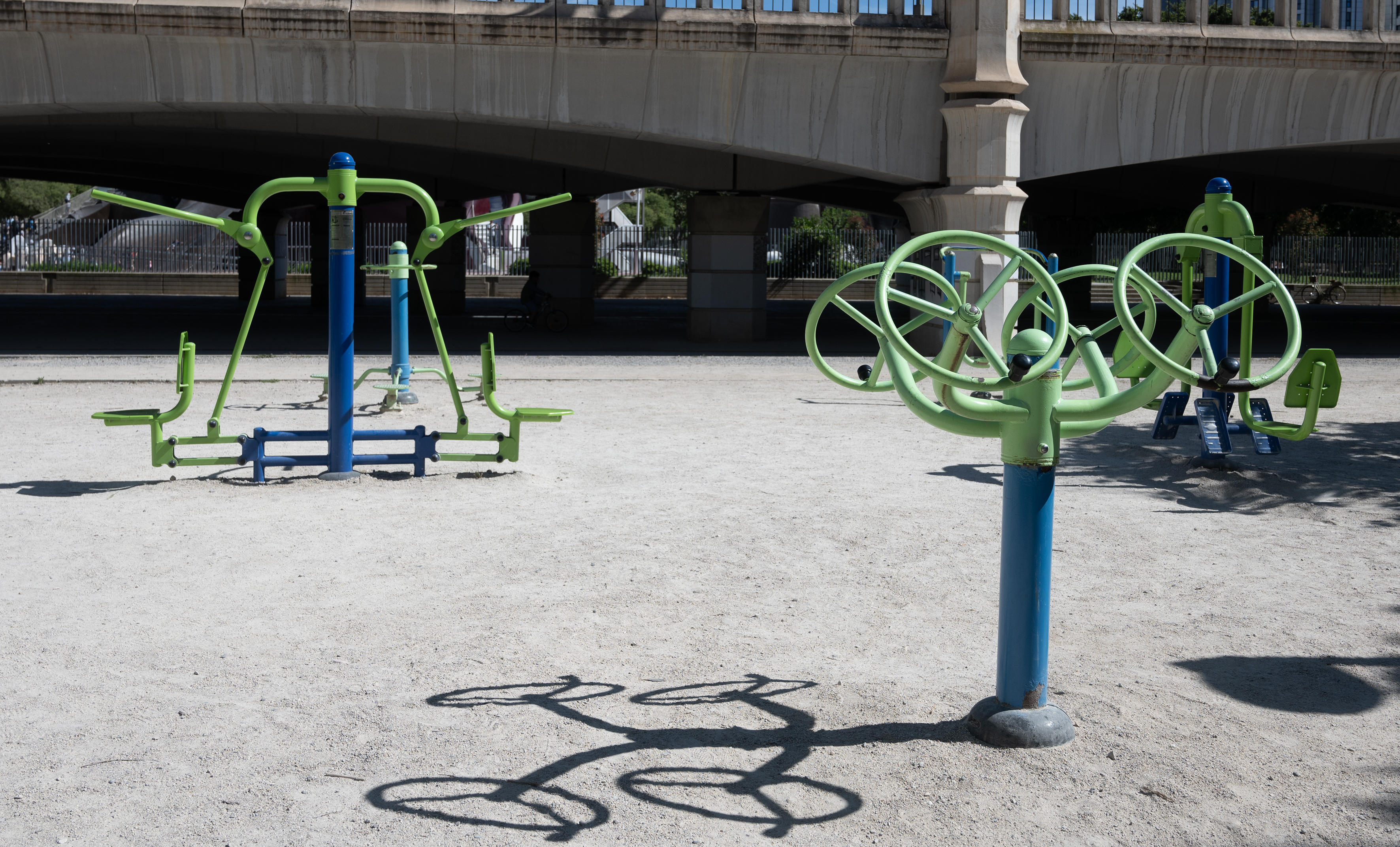
In the management sphere, digitalization is also here to stay: sports CRMs connect with user apps to offer flexible subscriptions, frictionless payments and segmented communication. Outside facilities, active urban furniture—such as modular stations, sensor-enabled surfaces or route lighting—has turned parks and avenues into open-air gyms.
Can you identify active urban furniture?
These are all those elements installed in public spaces that encourage citizens to move: calisthenics and street-workout parks, outdoor fitness equipment for cardio and strength, multi-sport courts, pump tracks or interactive pieces that engage users through lights, challenges and scoreboards.
Some of the best-positioned brands on the market:
- KOMPAN Outdoor Fitness: a brand with a broad catalog of cardio, strength and calisthenics equipment and its own app that geolocates parks and suggests workouts. Part of the equipment they offer connects to mobile phones to record usage data and progress.
- Lappset / Yalp: a benchmark in digital experiences such as the Yalp Sutu ball wall with LED panels and goal-based games. Ideal for activations, gamification and family audiences.
- The Great Outdoor Gym Company: cardio equipment that generates energy to charge devices and offers a “smart” option to measure usage through its Activate app. A good fit for projects with a sustainability narrative.
- Kenguru Pro: specialists in street-workout and calisthenics parks, with large-scale and inclusive projects, such as modules for wheelchair users.
- Norwell Outdoor Fitness: this brand stands out for its sober and durable design, with some references in Spain such as Bilbao.
The future of digitization in sport
Experts point out that within five years we will mainly see more “all-in-one” solutions (a single system for bookings, access, payments and energy) and greater task execution by AI, such as suggesting workout schedules, alerting demand peaks or scheduling maintenance.
So-called “light” digital twins will also emerge—virtual mock-ups that replicate sports centers to test certain changes, such as capacity or climate control, without implementing them in reality.
In general, more self-managed centers, automatic ESG reports (environmental, social and governance) and smart signage (screens and codes that guide and teach technique) to make different areas more educational.
On the street, meanwhile, active urban furniture—such as bars, stations or surfaces that count steps—will connect to local challenges and events.